
>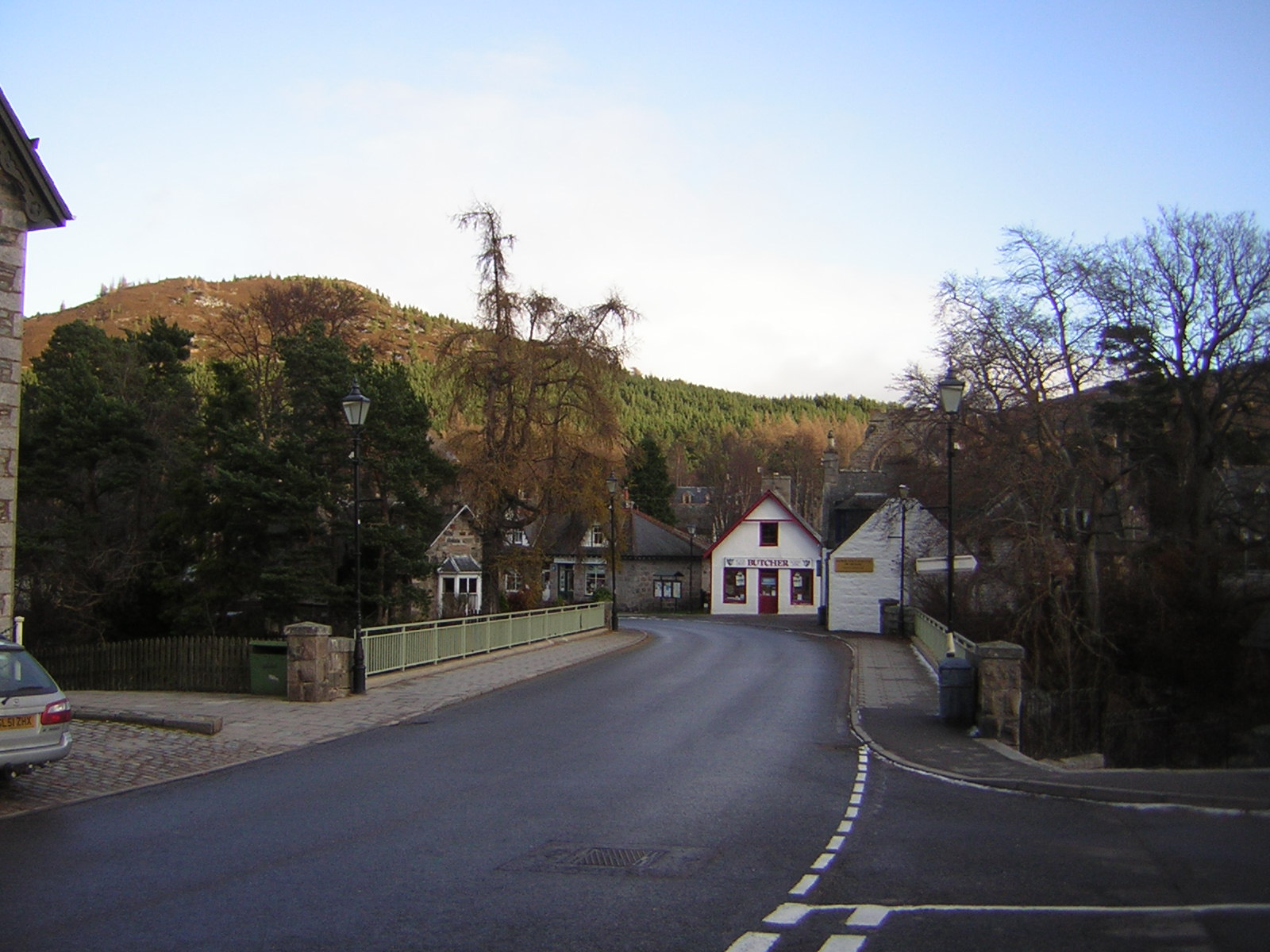 Braemar yesterday (Photos by Mark Vogan)
 Cairnwell Pass yesterday, cold and bitter wind.. Great Britain’s highest pass!! (Photo’s by Mark Vogan)
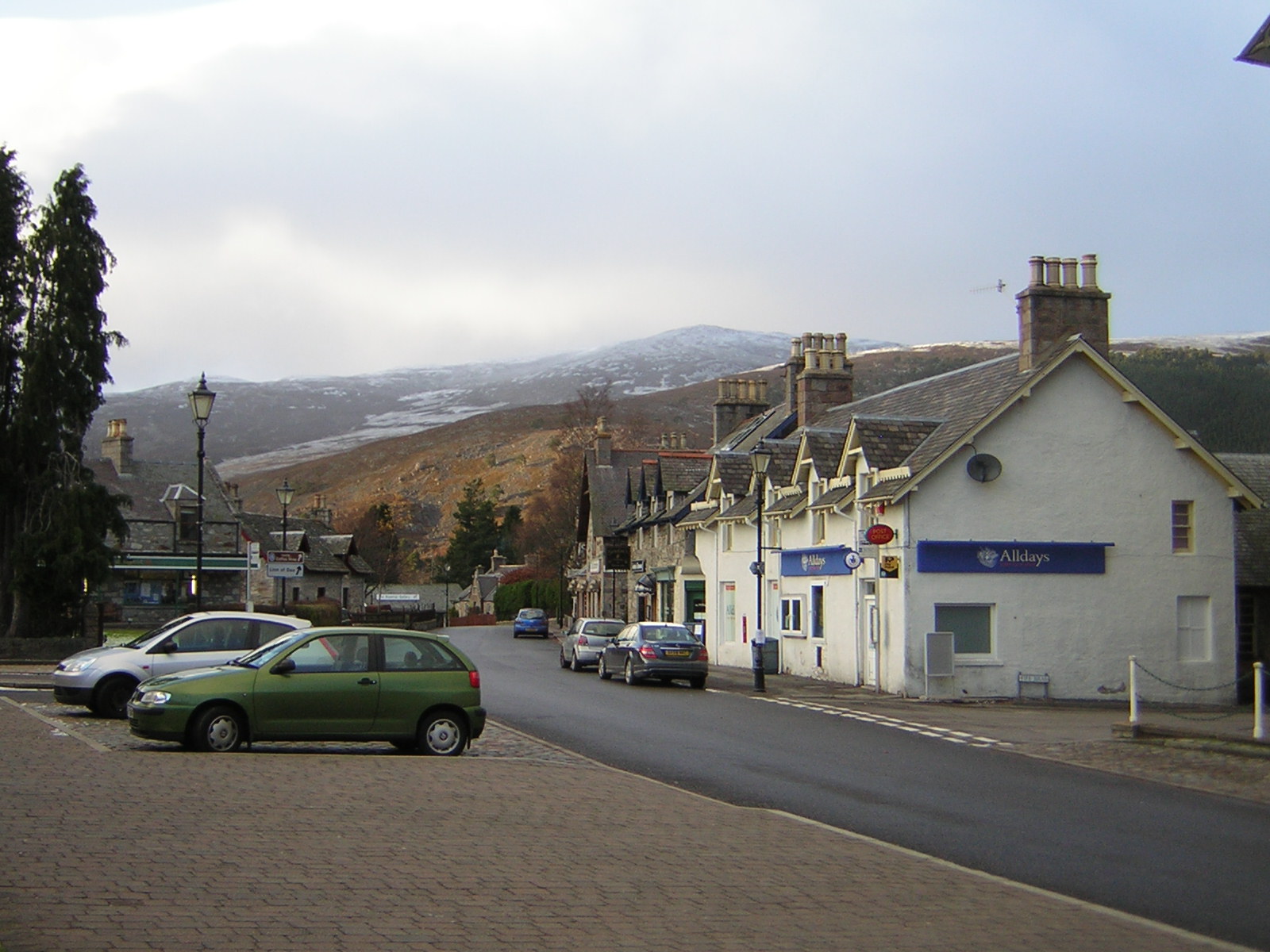 Village of Braemar (Photo’s by Mark Vogan)
As Scotland yesterday enjoyed some crisp, more typical air and a good deal of sunshine and light winds for a change, the atmosphere was primed to radiate any heat absorbed throughout yesterday and release it back to space as soon as the sun dropped last night, it would be easier to cool off those places that can’t warm much during the day as surrounding hills block much of the day’s sunshine therefore some locales in the Scottish Hghlands can be very chilly when areas within the central belt are balmy. For example, much of the time, Dalwhinnie, located high up regularly experiences the coldest daytime highs in Britain during the winter months, especially when snow is on the ground. Braemar is another cold nook and yesterday I took a drive up there and right enough it certainly felt much more sharper there than back in Glasgow. Keeping in mind Braemar sits over 1,000 ft above sea level and is sheltered by surrounding hills.
Last night was one of those classic winter nights. A cool, crisp autumnal day drew to a close as the stars shawn brightly under a full brilliantly bright full moon, not a breathe of wind..
This was the perfect ingredients which the Met Office had predicted ahead of the next Atlantic depression. Radiational cooling commenced as soon as the sun dropped below the horizon, allowing the cooling and release of surface heat back to space.. Much of the country was below freezing by 8pm and coastal areas well before midnight. Areas of the Highlands and sheltered Glens which had at least a coating or dusting of snow where looking at a cold night ahead. Basically anywhere from Greenock, Inverclyde to Edinburgh was at -4 or lower by the time I got up for work this morning at 2.30am. To my surprise, Glasgow Airport, was at -6C. No snow and not a low i expected to be achieved there, perhaps if the ground was well frozen and frost lying thick throughout the daylight hours, id have understood such a cooldown, but I was surprised… I guess recent years have displayed such wimpy cold nights and that is what I am basing my surprise towards. I have also believed certain nights would hit certain lows, only to waken up to a dissapointing -4, rather than a more anticipated -6 or lower. There have been nights where snow has been on the ground and a -6 could not be achieved..
What was a concern for me driving my regular route down to Dumfries was the amount of water remaining from the recent flooding. A night in which saw temperatures drop within the interior and high parts of Dumfries and Galloway towards -7 or -8 was the freezing up of all residual runoff on roadways. Thankfully it seemed much of the roadways we’re well treated. However, with a lingering cold throughout today, dangerous icy patches were we’re prevalent on many roads throughout the day. It wasn’t just a cool, frosty night but a hard freeze.
Some cold numbers recorded ths morning…
BRAEMAR -9C / 16 degrees
TYNDRUM -8C / 18 degrees
ESKDALEMUIR -7C / 19 degrees
EDINBURGH -4C / 25 degrees
GLASGOW CITY CENTRE -4C / 25 degrees
ABERDEEN -4C / 25 degrees
MY HOUSE -5C / 23.9 degrees
The whole concept of getting away from either the coast where the warmth of the ocean leads to milder coastal temperatures or away from the urban heat island is shown up well with these places.
The heat of Edinburgh and Glasgow supressed the air’s ability to cool, with a cooldown which stopped at -4C whilst Glasgow Airport, west of the city and away from the urban heat island, experienced a full 2 degrees cooler than the city centre. Here roughly 6-8 miles north of Greater Glasgow and we saw a a degree cooler. Higher elevation plays a role but it’s also the location and surroundings. For perfect cooling, you want to be in a location where your in a high-elevation valley or plateau. The higher elevation means the air is thinner and therefore has the ability to cool faster than a location nearer or at sea level. Also, a high elevated area must have gently, not steeply slopped hills surrounding the high elevated location. That way as the air sinks at night under clear skies and a light wind regeme, then the cold air can sink down the hills and collect at the valley floor, this sinking of cold air down the hillsides allows the valley to collect the cold air and it’s simply becomes colder and colder as the process continues until sunrise. Braemar, Aviemore, Dalwhinnie, Tulloch Bridge and Altnaharra to name a few of the most famous cold spots all have similar geographic features which seperate their cold nights and days than anywhere else. Tyndrum and Braemar experienced the still, clear and calm night, the presense of even just a light coating of snow and air which gently swooshed down the surrounding hills and collected within these villages..
I hope to write a little more about Braemar and add some more photos from the picturesque village nestled within the Cairngorm National Park.
Thanks for reading.
-Mark


Recent Comments